
The Symbolism Behind World Cup Jerseys: More Than Just a Shirt
Football has long been more than just a sport. It’s a global phenomenon, a cultural language that unites nations, communities, and individuals. At the heart of this vibrant sport lies an iconic symbol: the World Cup jersey. More than a simple piece of clothing, the football shirt serves as a canvas, telling stories of national pride, heritage, and unity. This article delves into the powerful symbolism behind World Cup jerseys, exploring their role in football culture and how they reflect national identity, history, and emotion.
World Cup Jerseys: A Canvas of National Pride
When a national team steps onto the pitch in their World Cup jerseys, they wear more than just a football kit—they wear the collective pride of an entire nation. The colors, patterns, and designs of these shirts are often deeply rooted in a country’s cultural traditions, representing a rich history of triumphs, struggles, and aspirations. Football fans worldwide not only see these shirts as uniforms but as symbols of their national identity.

National Identity and Jerseys
Football jerseys often serve as a powerful expression of national identity. Take Brazil’s iconic yellow and green shirt, for example. This jersey isn’t just about football; it reflects Brazil’s vibrant culture and history. The colors echo the country’s flag, representing the Brazilian spirit and a deep connection to its roots. Likewise, England’s Three Lions emblem, displayed proudly on the chest of their shirts, is a symbol of strength, heritage, and pride that dates back centuries.
These designs transcend sports. They connect fans to their country’s traditions, invoking feelings of patriotism and unity. The jersey becomes more than a piece of fabric; it becomes a declaration of belonging. For fans, wearing their team’s jersey means embodying the spirit of their nation on the global stage.
Football Shirt Symbolism: Beyond the Colors
The symbolism behind football shirts extends far beyond the colors and logos. Every stitch in a World Cup jersey carries meaning, whether it’s the iconic team stripes or the special motifs that celebrate national achievements. The choice of colors alone can tell a compelling story. For instance, Italy’s Azzurri blue reflects the country’s regal heritage, while France’s deep blue jersey evokes a sense of honor, as it represents the nation’s historical links to royalty and revolution.
Football Culture and Jerseys: The Connection to Fans
Jerseys, particularly those worn during the World Cup, also play a crucial role in the relationship between teams and their supporters. Football fans are fiercely loyal, and their connection to their team’s jersey is more emotional than rational. Fans wear their jerseys as a badge of honor, a way to show their unwavering support for the team. Whether it’s a match in the streets of Rio or a pub in London, these shirts unite people across the globe, igniting a sense of belonging.
The jersey serves as a bridge between the player and the fan, an emotional connection that transcends the boundaries of the stadium. It’s not just about the 90 minutes on the field; it’s about the shared experience of victory, defeat, and everything in between. The relationship between football jerseys and fans is so deep that many supporters consider their jerseys prized possessions—kept in pristine condition, passed down through generations, and displayed as cherished memorabilia.
The Evolution of World Cup Jersey Design: Tradition Meets Innovation
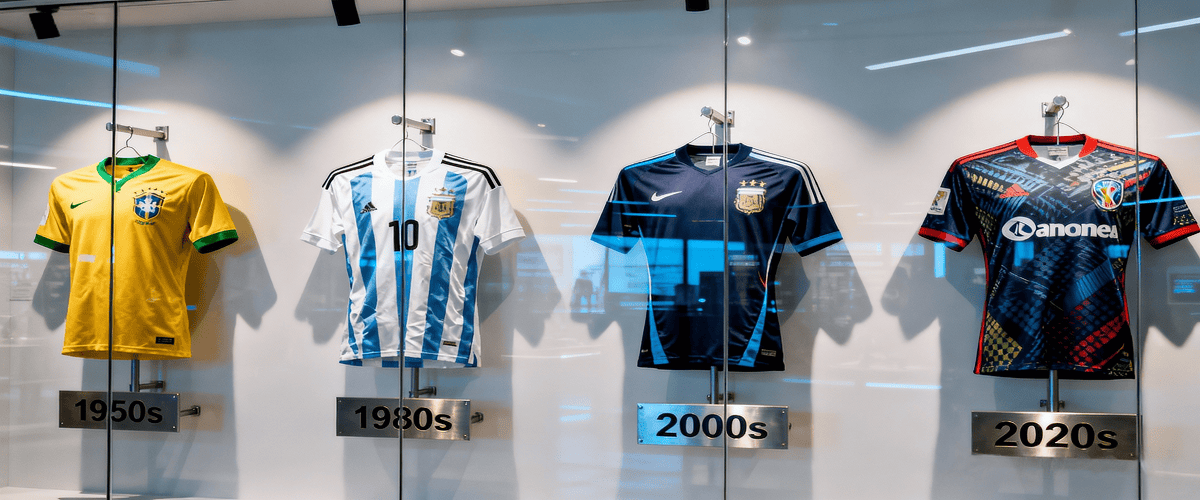
Over the decades, World Cup jersey designs have evolved from simple, functional garments to elaborate pieces of art that fuse tradition with modern innovation. Early World Cup jerseys were often plain and practical, focusing on durability and comfort. However, as football gained global prominence, the designs became more intricate, incorporating unique colors, logos, and technological advancements.
Jersey Design History: The Shift in Aesthetics
The 1982 World Cup in Spain marked a turning point in jersey design history, with teams starting to experiment with more vibrant, bold patterns. Brazil’s shirt, in particular, became a symbol of football fashion with its fluid, dynamic design. This trend continued throughout the years, with 1990s jerseys becoming more colorful, while the 2000s saw the introduction of modern fabrics that enhanced performance.
Innovation in materials and design also became a focal point. Nike, Adidas, and other major brands incorporated cutting-edge technology into World Cup jerseys, enhancing comfort, flexibility, and breathability. The rise of moisture-wicking fabrics, lightweight designs, and aerodynamic fits revolutionized the way players interacted with their kits, all while maintaining the aesthetic identity of each national team.
Iconic World Cup Shirts: Jerseys That Made History
Some jerseys have become icons in their own right, etched in the memories of fans for years to come. These shirts are more than just a way to identify a team; they are symbols of unforgettable moments in football history.
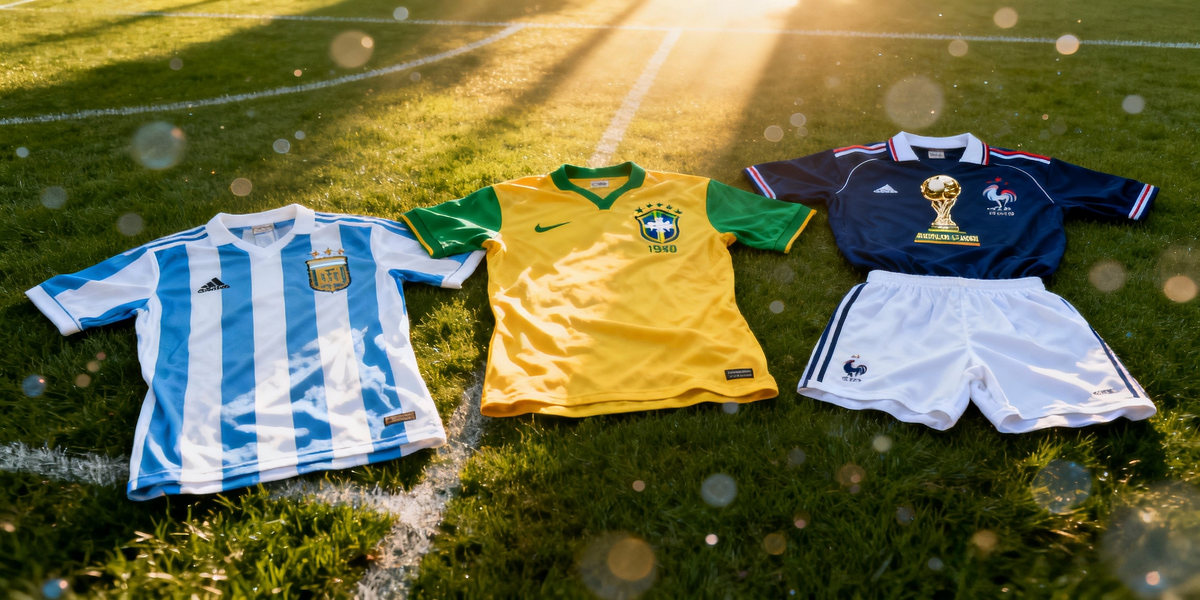
For instance, Argentina’s 1986 World Cup jersey, worn by Diego Maradona during his “Hand of God” and “Goal of the Century,” remains one of the most iconic shirts in football history. The simple, sky-blue and white striped jersey became synonymous with Maradona’s genius and Argentina’s triumph. Similarly, the 1998 French World Cup jersey, adorned with the “Les Bleus” crest, symbolized a new era of French football and their first World Cup victory.
Jersey Collectors and Memorabilia
The allure of these iconic World Cup jerseys has created an entire market of collectors and memorabilia enthusiasts. Jerseys worn by legends like Pelé, Zidane, and Messi are highly coveted, often fetching high prices at auctions and sports memorabilia stores. For fans, owning a piece of World Cup history is a way to stay connected to the sport and the iconic moments that defined it.
The Role of Team Colors and Symbols in Jersey Design
Every national team has its own distinct team colors, which play a significant role in how the jerseys are designed. These colors often carry historical or cultural weight, drawing from national flags, emblems, or symbols of the country. The team’s emblem, displayed prominently on the chest, often incorporates elements of the nation’s coat of arms or other iconic representations.
For instance, the German national team’s jersey prominently features the eagle, a symbol of the country’s unity and strength. Similarly, the Mexican team’s kit is adorned with an eagle—this time perched on a cactus, a direct reference to the Aztec heritage. These symbols and colors reflect the team’s legacy and cultural significance, which fans feel connected to.
Conclusion: The Enduring Power of World Cup Jerseys
World Cup jerseys are more than just clothing. They are powerful symbols of national identity, cultural pride, and football tradition. They transcend the game itself, becoming artifacts that tell the stories of players, fans, and nations. Whether it’s the design, the colors, or the historic moments associated with them, these jerseys are imbued with meaning that goes far beyond the football field.
As football continues to evolve, so too will the symbolism behind these jerseys. But one thing will always remain the same: the enduring connection between fans and their team’s jersey. The shirt may just be a fabric, but the pride and emotion it represents are very real.