
How to Properly Care for Your World Cup Jersey
A World Cup jersey is more than just sportswear — it’s a piece of football history, a symbol of national pride, and for many, a collector’s item. Whether you’ve invested in an authentic edition or a replica version, knowing how to maintain it properly can preserve both its color and emotional value for years to come. Proper World Cup jersey care begins with understanding your fabric, washing habits, and long-term storage strategy.
Understanding Your Jersey’s Fabric
Before tossing your jersey into the wash, take a moment to check the material composition. Most football kits are crafted from polyester-based performance fabrics, designed for breathability, moisture control, and light weight. However, these materials are sensitive to heat, friction, and harsh detergents.
Knowing this helps you tailor your jersey fabric care guide — protecting printed logos, stitched crests, and player numbers from early wear. Jerseys aren’t just garments; they’re technical textiles meant for performance, not punishment.
How to Wash Football Jerseys Without Damage
When it comes to how to wash football jerseys, always think gentle. Harsh washing cycles and hot water are your jersey’s worst enemies. Instead, use a cold water wash for polyester jerseys, ideally on a delicate setting.
If possible, hand washing is even better. Fill a basin with cool water, add a small amount of mild detergent, and gently massage the fabric. Avoid scrubbing logos or printed areas. For machine washes, turn the jersey inside out and use a protective mesh laundry bag.
Remember — aggressive spin cycles can stretch fibers and damage nameplates. A gentle wash keeps your kit looking match-ready season after season.
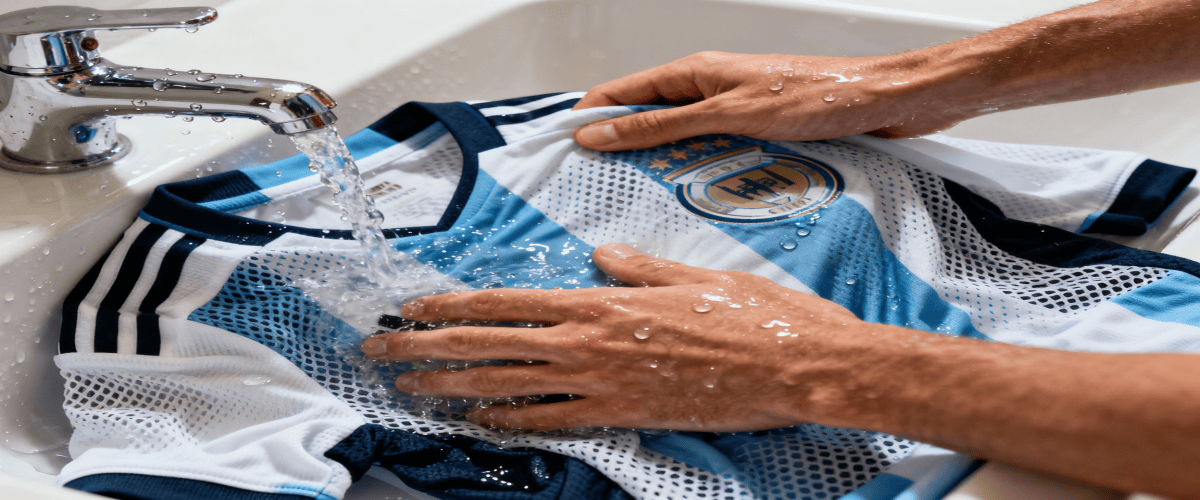
Cleaning Soccer Shirts Properly: Avoid Common Mistakes
Proper cleaning soccer shirts properly isn’t just about detergent choice. One of the most common errors is using bleach or strong fabric softeners, which can break down synthetic fibers and dull vibrant colors.
If you’ve been part of a muddy match or an intense training session, treat stains immediately. Avoid high-temperature water when removing stains from sportswear — it can set the marks permanently. Instead, pre-treat with a mild stain remover or baking soda paste, then wash gently.
Never wring or twist the shirt to dry; instead, press it gently between towels to remove excess water.
Drying and Preserving Jersey Quality
Your next priority is to preserve jersey quality during drying. Air drying is always best. Hang your football kit in a shaded, well-ventilated area to avoid jersey fading caused by direct sunlight.
Skip the dryer — even a low-heat setting can warp the shape and ruin heat-pressed graphics. This is especially important for collector jerseys, where authenticity and condition are everything. Think of it as keeping your piece of World Cup history in pristine museum quality.

Prevent Jersey Fading and Odor Build-up
Over time, sweat and detergent residues can cause both fading and odor. To prevent jersey fading, rinse your shirt thoroughly after each wash and avoid soaking it for too long.
When it comes to preventing odor build-up in athletic wear, vinegar works wonders — a half cup added during rinsing neutralizes bacteria and keeps the fabric fresh. Always ensure your jerseys are fully dry before storing to prevent mildew growth.
Storing Football Jerseys the Right Way
Knowing how to handle storing football jerseys is key for long-term preservation. For regular use, fold them loosely and store in a cool, dry place. For collectible or signed jerseys, use acid-free tissue paper between folds or consider framing them under UV-protected glass.
Avoid wire hangers — they can distort shoulder seams over time. Instead, use padded or wide plastic hangers if hanging is preferred.
For long-term storage of collectible jerseys, keep them away from sunlight and humidity, as these can discolor and degrade the material.
Authentic vs Replica Jersey Maintenance
There’s a difference between authentic vs replica jersey maintenance. Authentic versions often feature lighter fabrics, laser-cut ventilation, and bonded seams, making them more delicate. Replica jerseys, while slightly heavier, are more durable for casual wear.
Treat both with equal respect, but adjust your cleaning approach — authentic jerseys demand extra caution with temperature and detergents. In both cases, handle printed areas carefully and avoid direct ironing.
Bonus: Scent, Texture, and Longevity Secrets
Want your jersey to smell fresh and feel new for years? Add a few drops of essential oil to your final rinse or store jerseys with a natural deodorizer like activated charcoal. Always avoid scented dryer sheets — they leave a residue that can yellow fabric over time.
For the passionate fan, caring for your jersey is not just a chore — it’s a ritual. A well-maintained kit becomes a timeline of your favorite moments, from first whistle to final glory.
Final Thoughts
Proper care ensures that your World Cup kit stays vibrant, smooth, and true to its legacy. From washing tips and fabric knowledge to long-term preservation, small efforts go a long way. Treat your jersey as a badge of honor — because that’s exactly what it is.