
This article explores the rising trend of sublimated football jerseys in the dropshipping industry, examining why manufacturers producing these custom garments have become the preferred partner for dropshippers in 2026. It covers the technical advantages of sublimation printing, operational benefits, cost structures, and provides a practical guide for dropshippers looking to enter this market segment.
# Why Sublimated Football Jerseys Manufacturers Are the Top Choice for Dropshippers in 2026
Definition: What Are Sublimated Football Jerseys?
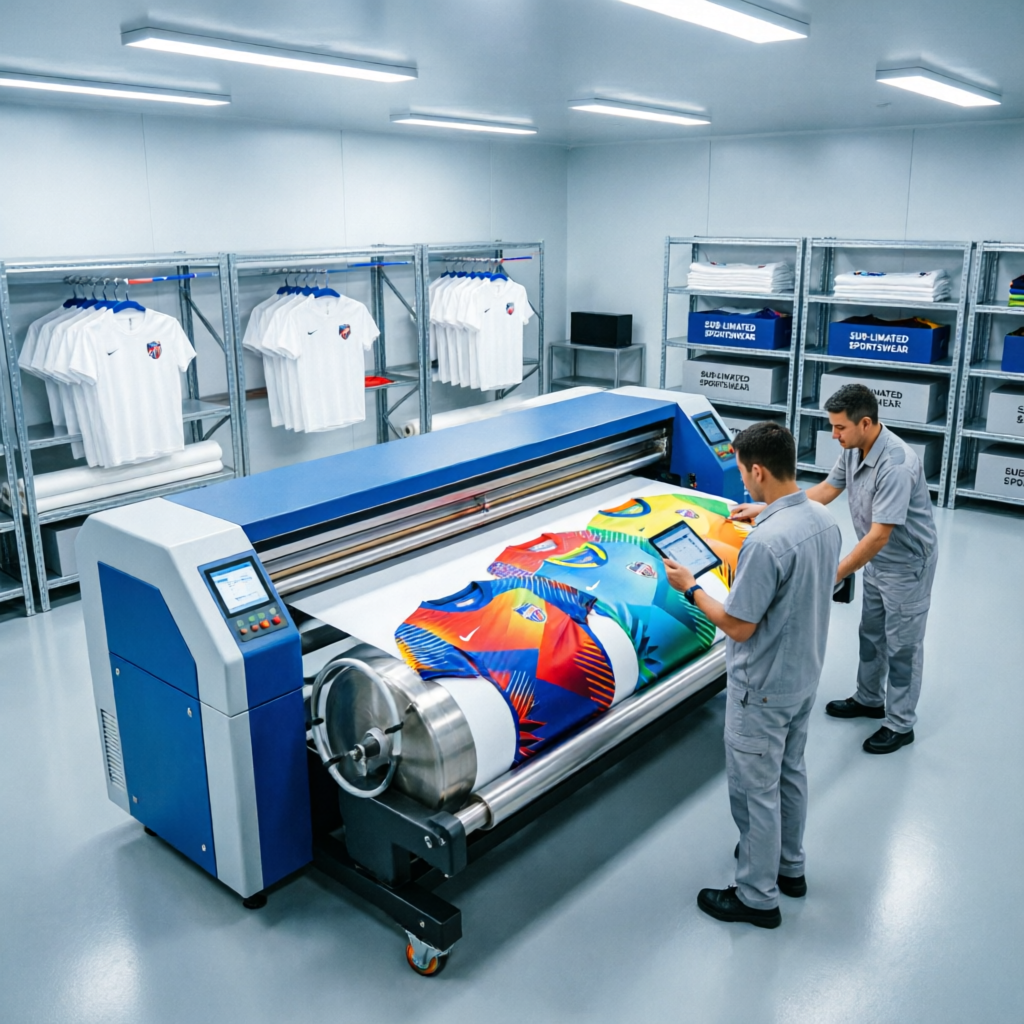
Sublimated football jerseys are garments created using a dye-sublimation printing process where heat and pressure transfer ink directly into polyester fabric fibers, resulting in vibrant, durable designs that won’t crack, fade, or peel. This manufacturing method has become increasingly popular among dropshippers seeking customizable sports apparel products.
Key Advantages of Sublimated Football Jerseys for Dropshippers
– Design Flexibility: Full-print capabilities allow unlimited customization without additional setup costs
– No Inventory Risk: Manufacturers produce items only after customer orders are placed
– Quality Consistency: Automated printing processes ensure uniform product quality across batches
– Lower Minimum Orders: Most manufacturers accept single-item production runs
– Faster Turnaround: Digital printing eliminates traditional setup times associated with screen printing
Understanding the Sublimation Manufacturing Process
The sublimation printing process represents a significant advancement in custom apparel manufacturing. Unlike traditional screen printing, where ink sits on top of fabric, sublimation bonds ink directly with polyester fibers at the molecular level. This creates several advantages that make it particularly suitable for dropshipping business models.
The process begins with manufacturers using specialized software to print designs onto transfer paper using sublimation inks. These designs are then placed on polyester jerseys and subjected to heat (typically around 400°F) and pressure. The ink transforms from solid to gas state, penetrating the fabric fibers and becoming permanently embedded. The result is a jersey where the design feels like part of the fabric rather than a surface coating.
Why Dropshippers Are Choosing Sublimated Jersey Manufacturers
The dropshipping model relies on third-party suppliers to fulfill orders, and sublimated football jersey manufacturers have positioned themselves as ideal partners for several compelling reasons.
Inventory Management Elimination: Traditional retail requires storing physical inventory, which ties up capital and creates storage costs. Sublimation manufacturers operate on a made-to-order basis, meaning dropshippers never purchase items until customers have already paid. This eliminates the risk of unsold inventory and allows entrepreneurs to test designs without financial commitment.
Scalability Without Infrastructure: As a dropshipper’s business grows, they don’t need to invest in additional equipment or hire more staff. The manufacturer handles all production capacity scaling, allowing dropshippers to focus on marketing, customer service, and brand building rather than manufacturing logistics.
Design Differentiation: In a crowded e-commerce marketplace, product uniqueness drives competitive advantage. Sublimation printing enables dropshippers to offer thousands of design variations without minimum quantity requirements per design. A dropshipper can list 50 different team designs and only produce those that customers order.
Comparison: Traditional Screen Printing vs Modern Sublimation
| Feature | Traditional Screen Printing | Modern Sublimation Printing |
|———|—————————|—————————-|
| Setup Costs | High (screens for each color) | Minimal (digital files only) |
| Minimum Order Quantity | 50-100 units typically | 1 unit acceptable |
| Design Complexity | Limited by color separation | Unlimited full-color designs |
| Production Time | 2-4 weeks for setup | 3-7 days total |
| Durability | May crack over time | Permanent bond with fabric |
| Inventory Requirement | Must stock multiple sizes/colors | Made-to-order available |
| Profit Margin | Lower due to inventory costs | Higher due to no upfront inventory |
Step-by-Step Guide: Partnering with Sublimated Jersey Manufacturers
Step 1: Research and Verify Manufacturer Capabilities
Begin by evaluating potential manufacturing partners. Look for facilities with experience in sports apparel specifically, as football jerseys require precise pattern grading and durable construction. Request samples and assess print quality, fabric weight, and stitching finish. Verify that manufacturers use certified sublimation equipment and quality polyester fabrics.
Step 2: Establish Design Templates and Brand Guidelines
Work with your manufacturer to develop jersey templates that accommodate various team colors, logos, and number styles. Create reusable templates that streamline the design process for each new customer order. Establish clear specifications for fabric blends (typically 100% polyester or polyester-spandex blends), GSM weight, and construction standards.
Step 3: Integrate with E-commerce Platforms
Connect your online store with the manufacturer’s order system or API. Many modern sublimation manufacturers offer direct integrations with platforms like Shopify, WooCommerce, or Etsy. Ensure automated order transmission, tracking information syncing, and inventory status updates function correctly before launching.
Step 4: Define Quality Control Procedures
Establish clear quality standards and inspection protocols with your manufacturer. Request photos of each completed order before shipping, or arrange for third-party quality inspection services. Define acceptable tolerance levels for print alignment, color accuracy, and garment defects.
Step 5: Launch and Optimize Based on Customer Feedback
Start with a limited product line to test market response. Collect customer feedback regarding fit, print quality, and shipping times. Use this information to refine your product offering and work with your manufacturer to address any recurring issues.
Market Trends and 2026 Outlook
The sports apparel market continues evolving, with sublimation-printed jerseys gaining market share across multiple segments. Several factors contribute to this growth trajectory.
Consumer Demand for Personalization: Modern consumers increasingly expect customized products. Team managers, league organizers, and individual players seek unique jerseys that reflect their identity. Sublimation printing perfectly addresses this demand for small-batch customization.
Sustainability Considerations: The made-to-order model inherent in sublimation manufacturing reduces fabric waste compared to traditional mass production. As consumers become more environmentally conscious, this aspect becomes increasingly relevant for brand positioning.
Technology Improvements: Advances in dye-sublimation printers and inks continue improving color vibrancy, print speed, and fabric compatibility. Manufacturers pass these efficiencies onto dropshippers through competitive pricing and improved product quality.
Frequently Asked Questions
Question: What is the minimum order quantity for sublimated football jerseys?
Answer: Most sublimated jersey manufacturers accept single-item orders, making this approach ideal for dropshippers. Unlike traditional manufacturing that requires minimum runs of 50-100 units per design, sublimation printing allows you to produce one custom jersey per customer order.
Question: How long does production take for sublimated jerseys?
Answer: Production typically takes 5-10 business days, including printing, sewing, and quality inspection. Shipping adds additional time depending on the destination. Many manufacturers offer expedited production for an additional fee if faster turnaround is needed.
Question: What fabric is used for sublimated football jerseys?
Answer: Sublimation requires polyester fabric for proper ink bonding. Most manufacturers use 100% polyester or polyester-spandex blends (typically 90% polyester, 10% spandex). These fabrics wick moisture effectively and withstand the heat press process without damage.
Question: Are sublimated jerseys durable compared to traditionally printed jerseys?
Answer: Yes, sublimated jerseys typically demonstrate superior durability. Since ink bonds with fabric fibers rather than sitting on the surface, the design won’t crack, peel, or fade even after repeated washing. The print becomes part of the fabric rather than a layer on top.
Question: How do I ensure color accuracy for team logos and designs?
Answer: Provide designs in CMYK color mode with vector formats when possible. Request color proofs from your manufacturer before bulk production. Most manufacturers use Pantone color matching systems to ensure accurate color reproduction for team specifications.